
toast
21 Jul 2026
Music Industry
Why Local Music Networks Still Matter in a Global Internet Economy
A musician can release a song from a bedroom in Ohio before breakfast and find a listener in Brazil before lunch. The same musician may spend the afternoon trying to locate a dependable drummer within forty miles who can learn six songs before Friday night. This is not a contradiction. It is the modern music economy in miniature.
The internet has made the distribution of music astonishingly global. It has not made the production of music placeless. Songs may travel as data, but careers still develop through rooms, relationships, reputations, equipment, institutions, and people who can arrive when they say they will. Geography did not disappear. It became easier to overlook.
Global reach is real
There is no reason to romanticize the limitations of the pre-digital music business. Artists once needed access to expensive recording infrastructure, manufacturing, physical distribution, radio gatekeepers, retail shelves, or a record company willing to finance the journey between them. Today, a musician with comparatively modest equipment can record, release, promote, and sell music to an international audience. That expansion of agency is one of the great technological gains of the era.
The scale is substantial. The IFPI reported that streaming accounted for 69.6 percent of global recorded-music revenue in 2025, while paid subscription services reached 837 million users. Spotify, whose interest in celebrating streaming should be obvious but whose data is nonetheless revealing, reported that artists receive more than half of their royalties from outside their home country, on average, within two years of debuting.
A local artist can now become internationally audible without first becoming nationally famous. A producer in Lagos can work with a vocalist in London. A guitarist in Nashville can send finished tracks to a songwriter in Tokyo. A fan can discover a regional genre that no commercial radio programmer in his city would have considered sufficiently broad for airplay. The old geographic walls around listening have been punctured, and often demolished.
The mistake is to conclude that because the audience can be global, the system that develops the artist no longer needs to be local.
Music still has a physical layer
The internet is exceptionally good at moving representations of things. It can transmit the recording of a performance, a photograph of a venue, a calendar invitation for a rehearsal, a digital payment, or a message asking whether anyone knows a competent front-of-house engineer. It cannot tune the room, repair the amplifier, carry the cabinet up the stairs, seat the audience, teach the student, or play the show.
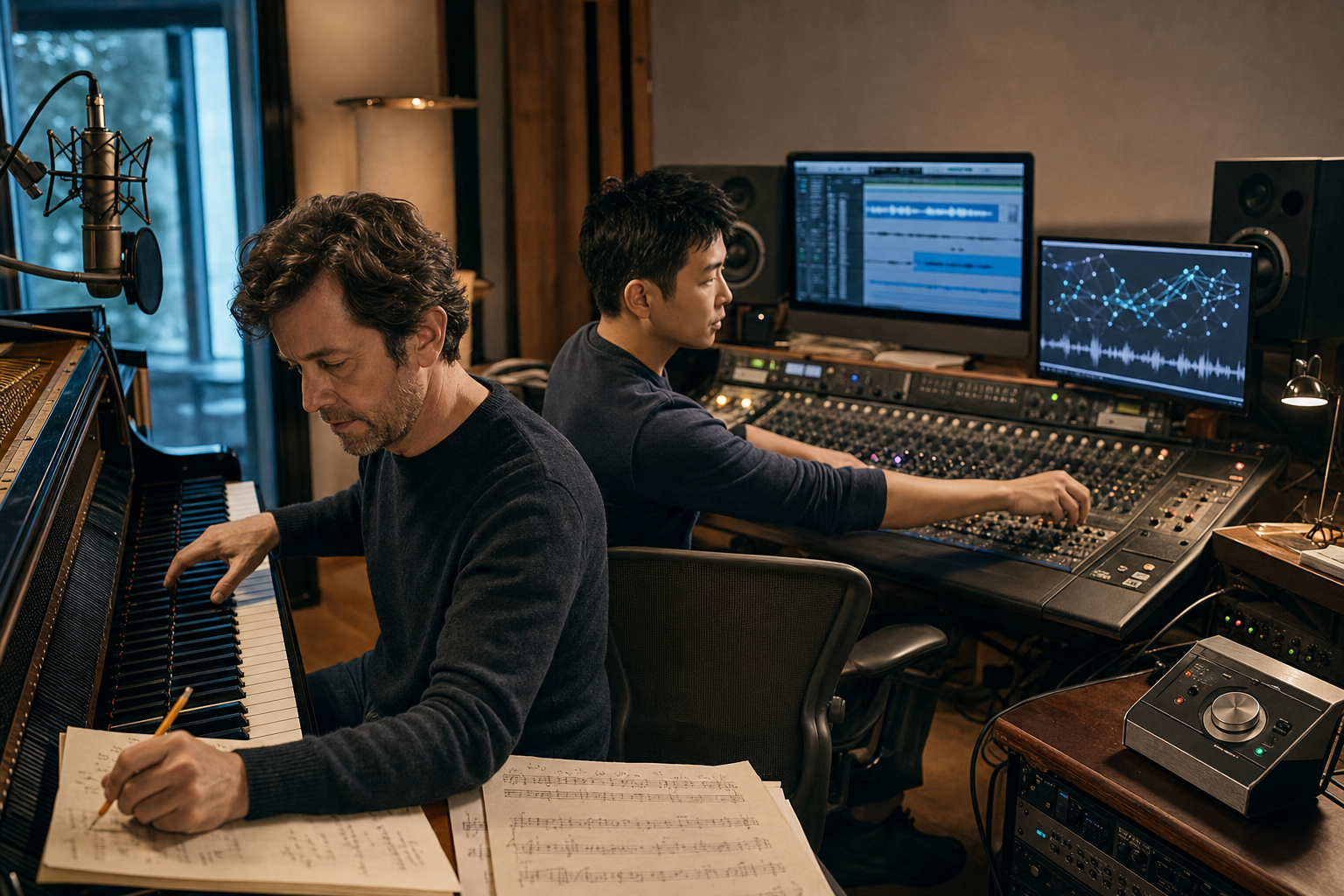
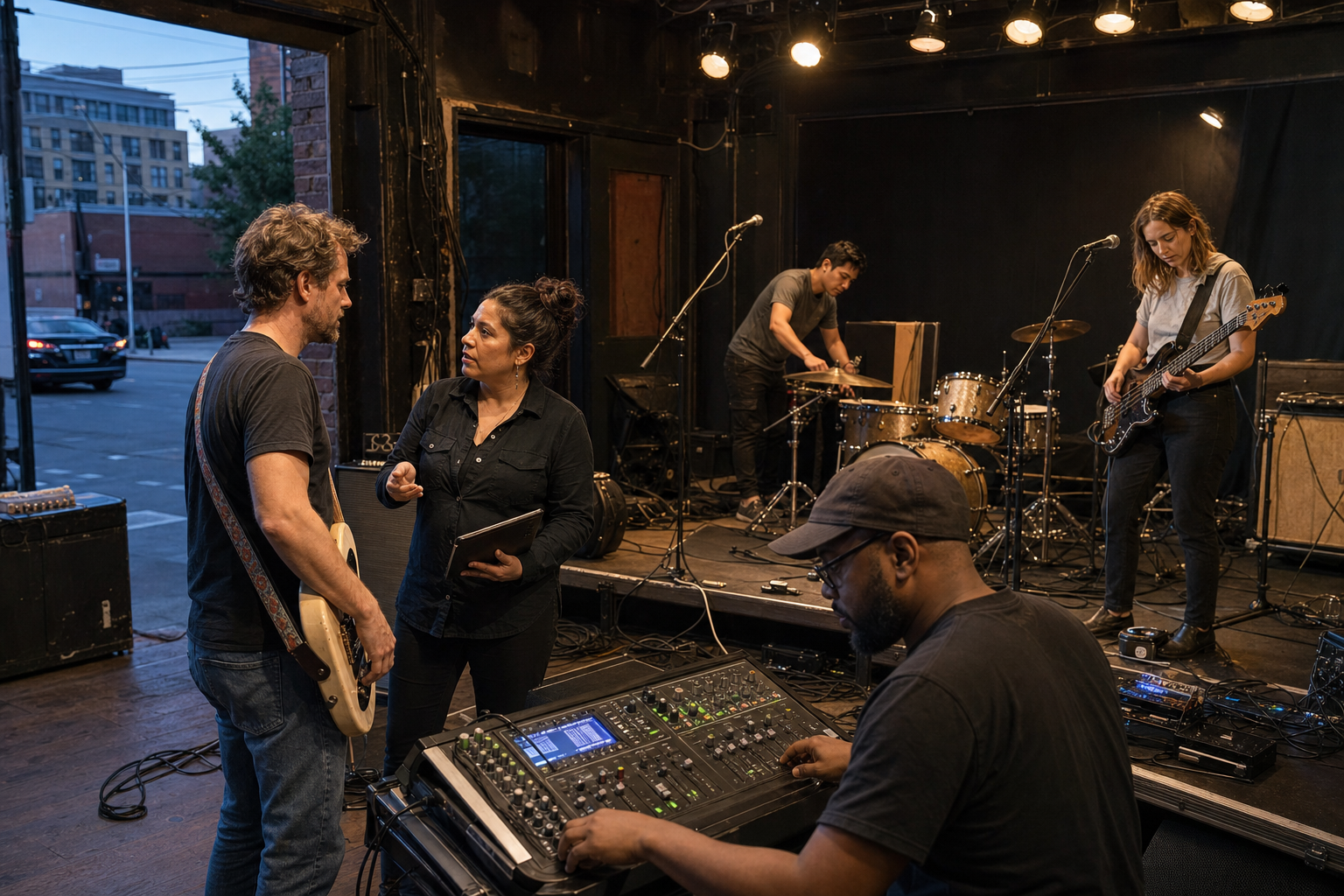
Even remote work depends upon local conditions somewhere. A mix engineer working across continents still occupies a treated room. A session vocalist still needs a microphone, an acoustic environment, and enough quiet to deliver the part. A touring band may cultivate listeners globally, but every date on the tour requires a local venue, promoter, crew, power supply, transportation network, and audience willing to leave the house. The cloud has many virtues. It has yet to learn how to load a drum riser.
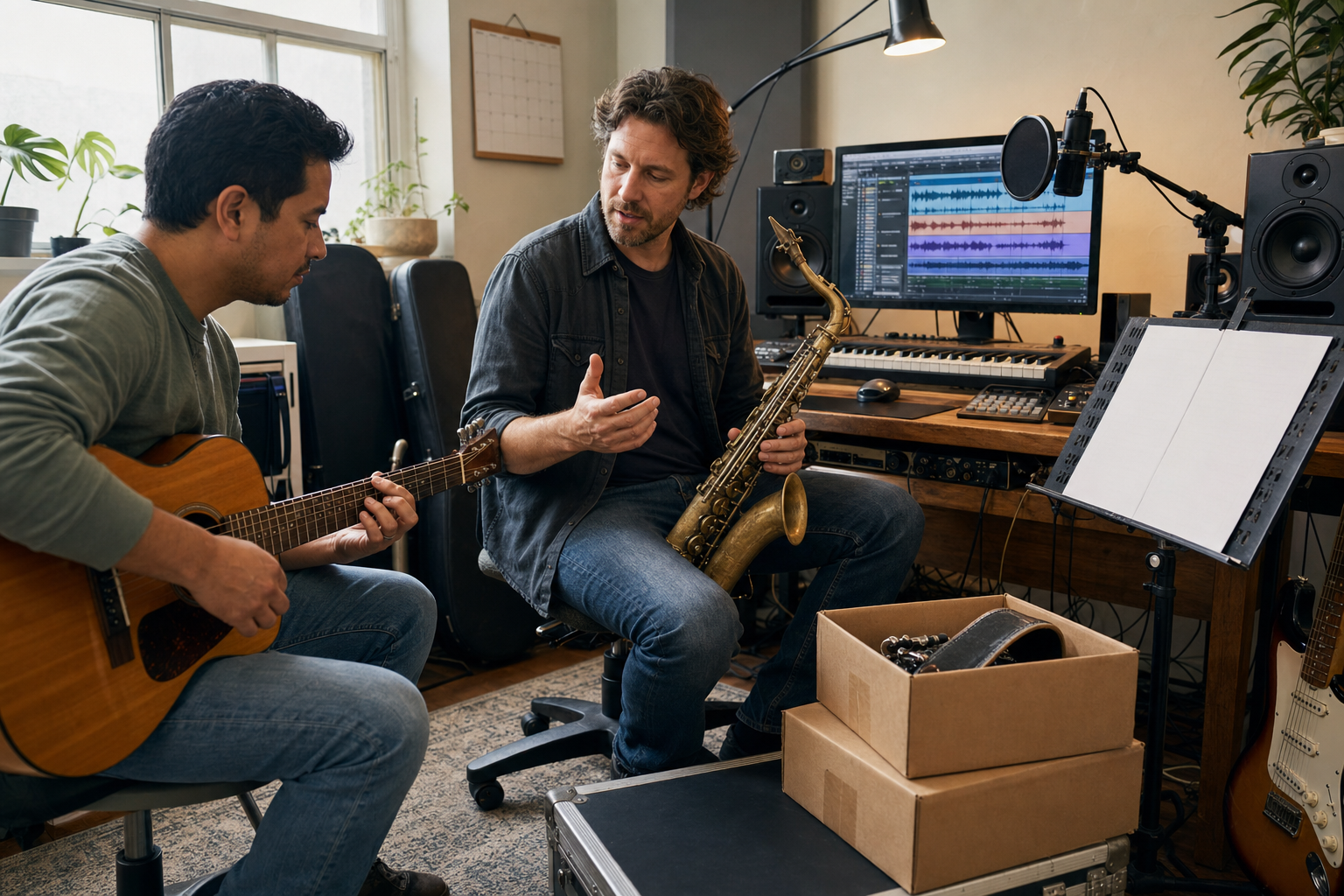
What we call a local music scene is therefore not only a collection of artists. It is infrastructure: venues, rehearsal spaces, studios, instrument stores, repair technicians, educators, photographers, engineers, promoters, managers, radio programs, festival organizers, printers, drivers, and the informal gathering places where information moves before it appears in any database. Some of this infrastructure is visible. Much of it lives in phone contacts, remembered favors, and the sentence, “I know someone you should call.”
Trust moves through networks
Music work contains more uncertainty than a polished release usually reveals. Schedules change. Budgets contract. Equipment fails. A player becomes ill. A client discovers during the session that the original arrangement does not work. Under these conditions, the most valuable professional is not always the person with the largest online audience. It is often the person known to exercise judgment under pressure.
This is why local networks persist even when communication becomes global. They carry trust. A recommendation from a respected engineer or venue manager compresses uncertainty because it is backed by accumulated experience and, to some degree, the recommender’s own reputation. The network remembers who was prepared, who listened, who solved the problem, who created three new problems, and who vanished immediately after requesting a deposit.
Such networks can be remarkably efficient for insiders. They can also be almost illegible to newcomers, young professionals, people returning to a city, and capable artists whose social circles do not happen to intersect with the established gatekeepers. The weakness of an informal network is not that it contains trust; trust is indispensable. The weakness is that valuable information may remain hidden inside relationships that outsiders cannot see.
A healthy digital platform should not attempt to abolish those relationships. It should make their useful professional signals more visible: location, role, instrument, genre, work samples, credits, availability, travel range, remote capability, reviews, equipment, and rates. Technology serves the local economy best when it reduces the friction of finding a real person rather than pretending the real person has become unnecessary.
Scenes are institutions of development
Local music ecosystems do more than allocate existing talent. They develop it. The beginner watches the experienced player. The opening act learns how a professional crew conducts a changeover. The assistant engineer observes how the lead engineer communicates with a nervous artist. The songwriter hears what survives contact with an audience. Standards are transmitted through proximity, repetition, correction, and example.
This formation is difficult to represent in platform metrics because much of it occurs before anyone is commercially impressive. Algorithms tend to reward evidence that attention already exists. Scenes create the conditions under which someone becomes worthy of sustained attention. A small venue may host the awkward early performances that teach an artist how to command a larger stage. A neighborhood studio may produce the first serious recording. A local teacher may correct the technical habit that would otherwise limit a career.
Music Canada’s Music Cities Toolkit reflects this institutional breadth by identifying not only musicians and songwriters, but venues, promoters, studios, labels, managers, agencies, stores, educators, tourism organizations, local radio, and civic groups as stakeholders in a music community. The point is larger than any particular civic program. A scene becomes durable when its participants understand that they belong to an ecosystem rather than a pile of unrelated occupations.
The physical layer is economically fragile
The institutions most essential to career development are often the least capable of absorbing economic shocks. Grassroots venues operate in real estate markets, tax systems, insurance environments, and regulatory structures that rarely account for their wider role in the talent pipeline. Rehearsal rooms and studios compete for buildings against uses with simpler margins. Independent stores carry inventory while online retailers compete primarily on scale. The cultural value of these places does not automatically appear on their balance sheets.
The United Kingdom offers a particularly well-documented warning. According to the Music Venue Trust’s 2025 annual report, grassroots venues there operated on an average profit margin of 2.5 percent; 30 permanently closed during the year, and 175 towns and cities no longer received regular touring shows from professional artists. Those are British figures, not a universal measurement, but the structural lesson travels. When a small venue disappears, a community loses more than a room with a stage. It loses a node through which audiences, artists, technicians, promoters, and future opportunities once met.
Digital reach can sometimes help these institutions by improving discovery, ticket sales, scheduling, and promotion. It cannot substitute for them after they are gone. A million streams in a region do not, by themselves, create an appropriate room in which an emerging artist can perform. Demand without local infrastructure remains an abstraction.
Local and global are not rivals
The choice between a local music economy and a global internet economy is false. Strong local networks are the nodes from which global opportunity emerges and to which its benefits can return. The local scene gives artists collaborators, practice, credibility, and physical infrastructure. The global network gives them reach, specialized partnerships, diversified audiences, and opportunities that geography once prohibited. Each corrects a limitation of the other.
Localism becomes unhealthy when it protects mediocrity, excludes outsiders, or treats proximity as a substitute for competence. Globalism becomes sterile when it reduces every relationship to content, every professional to a thumbnail, and every community to an audience segment. The coherent model preserves the human trust of place while using technology to widen access to it.
This is the opportunity for Soundzie and for platforms built with a similar premise. The goal should not be another endless feed of people performing visibility for an algorithm. It should be a working map of the music economy: who can play, teach, record, mix, repair, manage, photograph, promote, transport, host, and help; where they are; whether they can travel or work remotely; and what evidence supports their claims.
Making the local network legible
A city does not need to become Nashville, London, Los Angeles, or New York to possess a serious music economy. It needs its own participants to be findable, its working spaces to remain viable, its professionals to be credible, and its opportunities to circulate beyond the same small circle. A regional network becomes stronger when a touring act can locate a replacement player quickly, when a studio can find a technician, when a venue can identify dependable crew, and when a young artist can see a path from first lesson to first session to first tour.
The internet did not render local music networks obsolete. It gave us the means to make them more visible, permeable, and connected than they have ever been. Whether we use that technology to strengthen the underlying human architecture or simply add another layer of noise is a matter of design, incentives, and intention.
A song may reach the world at the speed of data. The career behind it still grows at the speed of trust.
Related Tags :
Local music scenes Music professionals Live music Music cities Music collaboration TouringShare Post :