toast
21 Jul 2026
Music Industry
The Portfolio Career of the Modern Music Professional
The popular imagination prefers a music career to have one title. A person is a singer, guitarist, producer, engineer, teacher, composer, manager, or technician. The title is expected to function like a permanent label on a well-organized drawer, clearly separating one professional identity from another.
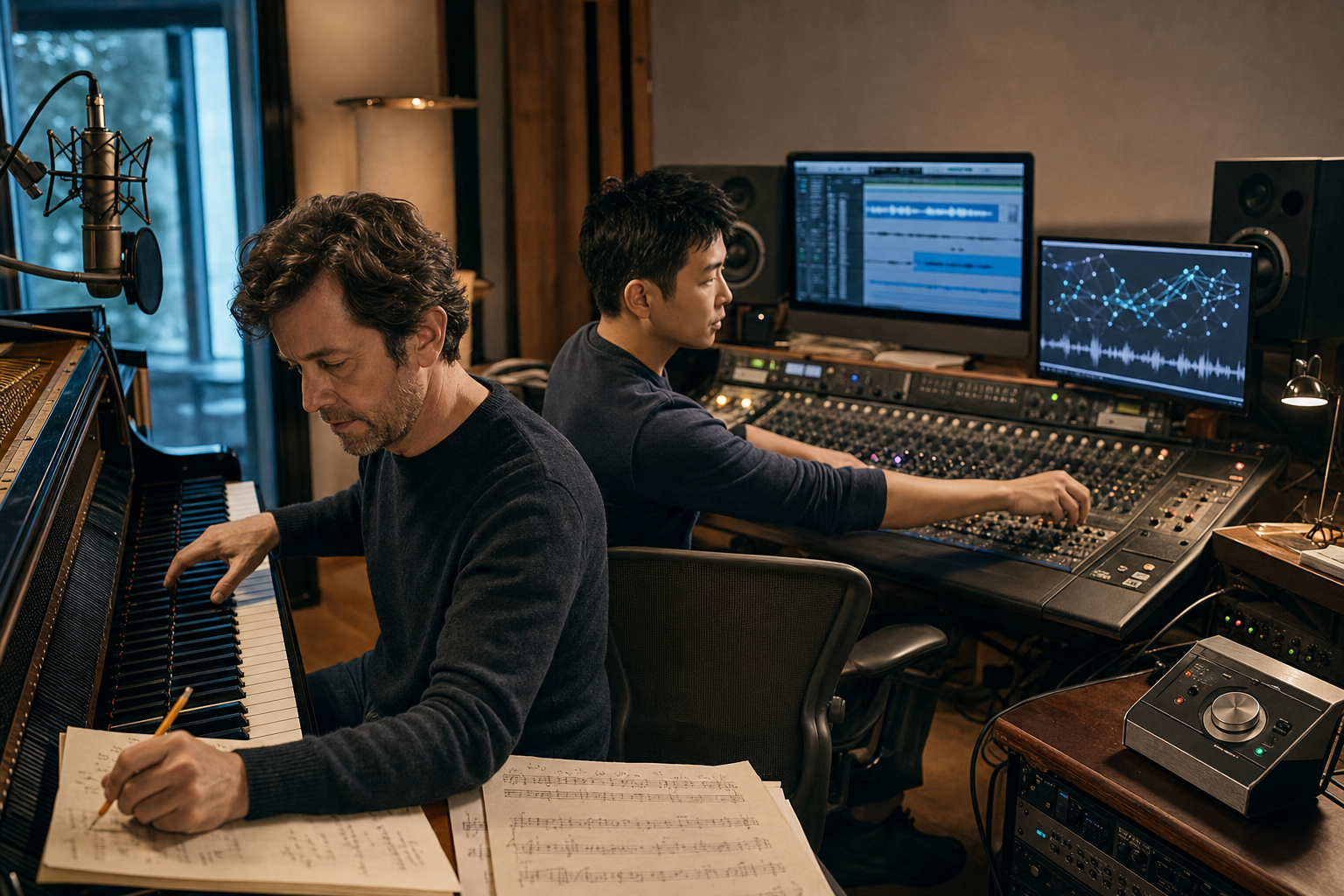
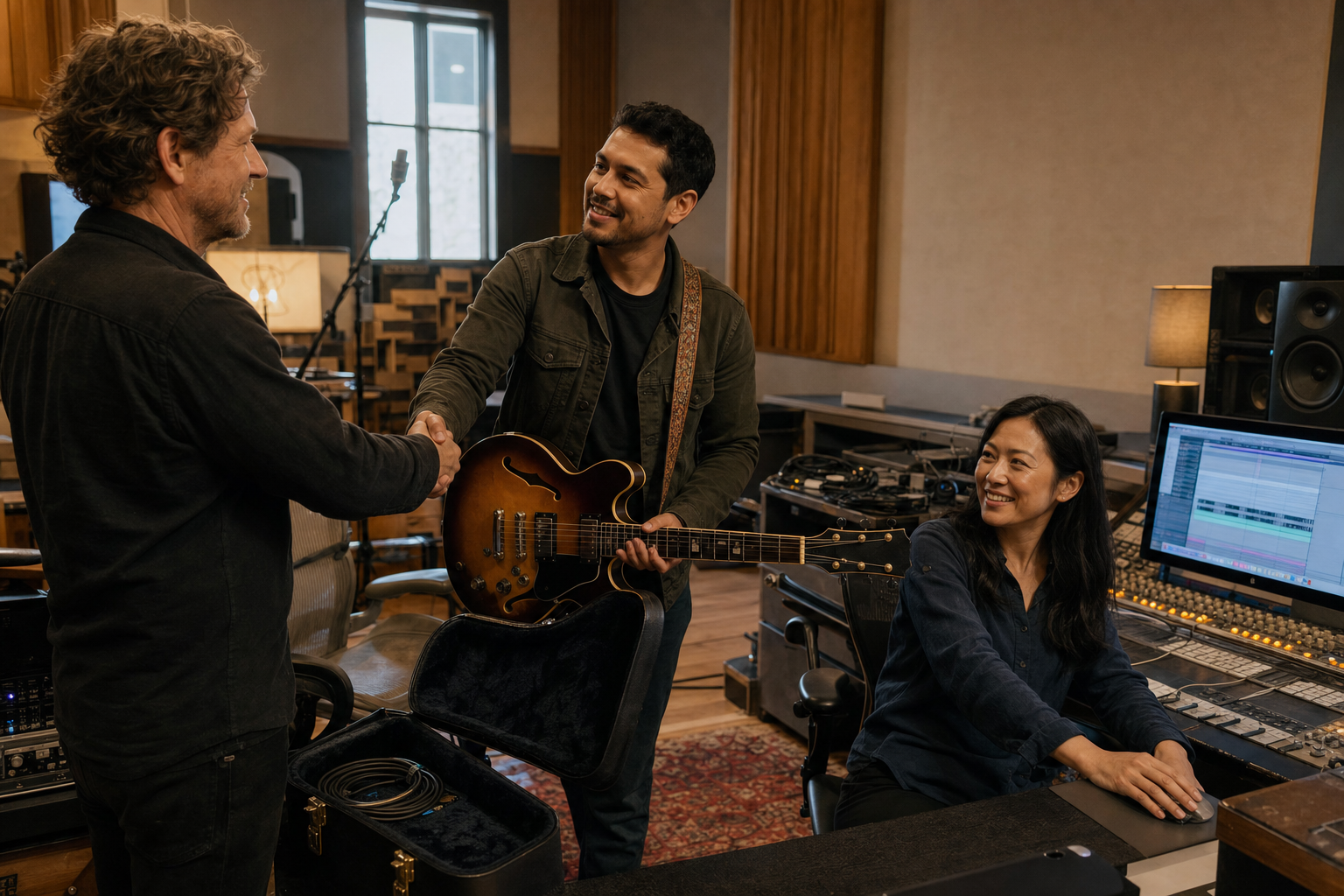
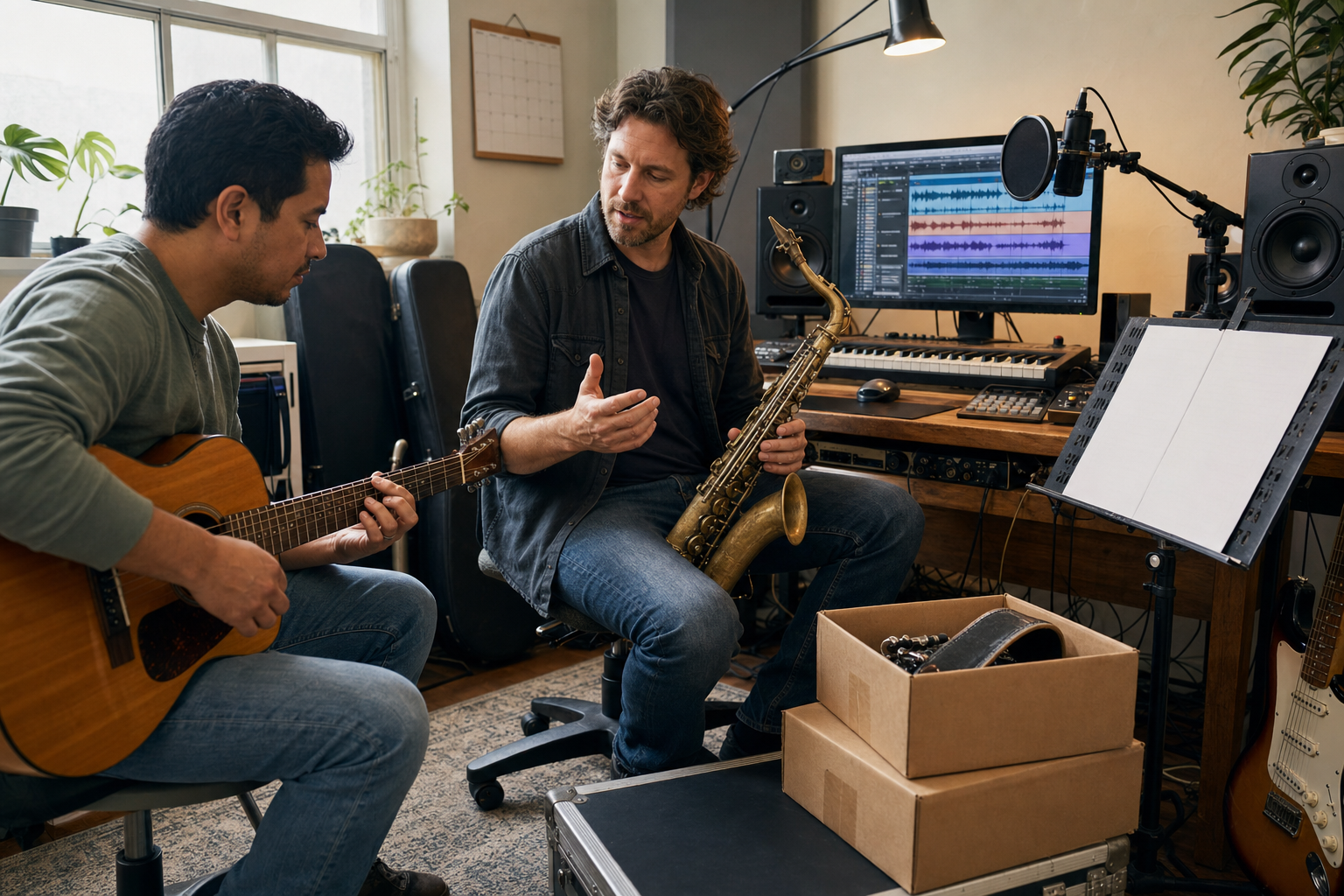
Actual music careers are rarely so considerate. The guitarist may teach on Tuesday, record remote sessions on Wednesday, repair instruments on Thursday, play a wedding on Friday, tour with an original project on Saturday, and spend Sunday shipping merchandise. The producer may also compose for film, mix podcasts, manage a small studio, and consult for live venues. What appears from the outside to be a single career is often a portfolio of interdependent work.
This is sometimes discussed as a regrettable failure to obtain a “real” job in music. That interpretation misunderstands both the economics and the history of creative labor. The portfolio career is not a temporary embarrassment on the way to professional legitimacy. For a large share of working music professionals, it is the professional structure itself.
The mythology of the single occupation
Industrial economies trained people to imagine work as a stable relationship between one worker, one employer, one location, and one occupational identity. Music never fit that model particularly well. Performers have long moved between theaters, churches, clubs, studios, schools, private students, touring ensembles, civic events, and commissioned work. Even musicians employed by permanent institutions frequently teach, arrange, conduct, compose, or perform elsewhere.
The recorded-music era temporarily made another model unusually visible: the artist whose recordings, touring, merchandise, publishing, and endorsements appeared to constitute one unified career. Yet even this was a portfolio disguised by a single public identity. The audience saw the artist. The business saw multiple rights, products, services, territories, contracts, and revenue streams.
Digital technology did not invent occupational multiplicity. It exposed it, expanded it, and transferred more of its administration to the individual. A musician can now distribute a recording, teach by video, sell equipment, deliver a remote session, license a composition, promote a show, and manage payments through the same laptop. This increased agency is real. So is the workload.
A portfolio is more than a collection of side hustles
The phrase “side hustle” is too often applied to any work that occurs outside a conventional salary. It carries the faint suggestion that every waking hour should be converted into a small and aggressively branded revenue opportunity. A portfolio career is better understood as an intentional arrangement of capabilities, roles, clients, and income sources that together sustain a professional life.
The distinction matters because random activity produces exhaustion more reliably than resilience. Five unrelated jobs with conflicting schedules may diversify income while fragmenting attention. A coherent portfolio allows one form of work to reinforce another. Performing sharpens the teacher’s practical insight. Teaching deepens the performer’s command of fundamentals. Session work expands the producer’s network. Production creates material that demonstrates the engineer’s skill. Repair work increases the touring musician’s technical independence.
The portfolio has architecture. Its parts should share skills, relationships, equipment, reputation, intellectual property, or market access whenever possible. Otherwise, the professional is not building a career so much as repeatedly starting several of them.
Diversification is an economic response
Music income is uneven by nature. Touring is seasonal. Lessons fluctuate around school calendars. Venue work rises and falls with local demand. Recording projects arrive in clusters and then disappear with little concern for the recipient’s rent. Royalty income may be delayed, unpredictable, or too small to support the work that produced it. A portfolio distributes exposure across several markets and time horizons.
Recent data makes the pressure visible. UK Music reported in 2026 that employment across the British music industry had reached 220,000 people in 2024, while 43 percent of musicians earned less than £14,000 annually from music. Its analysis noted that freelancers and self-employed creators were increasingly moving toward portfolio careers. These are British figures and should not be carelessly universalized, but the underlying economics will be familiar to music professionals elsewhere.
Diversification can smooth this volatility. Teaching may provide recurring weekly income while performance work remains variable. Repairs, rentals, production, editing, or consulting can continue when touring slows. A catalog of compositions or educational material can produce revenue on a different schedule from live work. No single stream must carry the full burden of the career every month.
This does not eliminate risk. It redistributes it. A professional with six income streams can still discover that all six depend upon the same local economy, platform, client, season, or physical ability. The useful question is not how many streams exist, but whether they fail for the same reasons.
Multiple roles can preserve artistic freedom
Portfolio work is often discussed only as financial survival, which misses one of its more important benefits. Income earned through teaching, session work, production, or technical services may allow an artist to make original work without demanding that every song immediately satisfy the market. Commercial diversity can create artistic patience.
The alternative is not always purer. When one creative project must pay every bill, market pressure enters the rehearsal room whether invited or not. Audience metrics begin to govern artistic decisions. Short-term visibility becomes difficult to distinguish from long-term value. The artist may avoid experiments, unfamiliar collaborators, or slow-developing work because the economic system cannot tolerate delay.
A well-designed portfolio can provide enough stability to resist that pressure. The teaching studio, production client, or equipment business is not necessarily a distraction from the art. It may be the institution that protects the art from desperation.
The portfolio compounds professional capital
Each role in a music career can generate more than immediate income. It may create relationships, knowledge, assets, reputation, or access that strengthens the rest of the portfolio. A teacher meets developing players and their families. A venue technician meets touring crews and promoters. A session musician meets producers, engineers, songwriters, and other players. A seller of used gear learns what local professionals need and what equipment is circulating through the market.
This compounding effect helps explain why apparently modest engagements can become strategically important. A small session may lead to a tour. A repair may lead to a studio referral. A lesson may reveal a talent who later becomes a collaborator. Professional networks do not develop only through formal networking events, useful though name badges and weak coffee may sometimes be. They develop through repeated competent participation in the work itself.
Berklee Online has described portfolio careers as musicians combining several activities into a full-time professional life, while still emphasizing the importance of excellence in at least one central skill. This is a crucial qualification. Diversification should extend a professional foundation, not conceal the absence of one.
Breadth requires an anchor
A coherent portfolio usually has an anchor: the skill, identity, body of work, client base, or market position around which the other roles make sense. The anchor need not produce the most income in every season. It gives the career direction and allows other people to understand what the professional fundamentally does.
Without an anchor, breadth can become illegibility. A person who presents twelve unrelated services with equal emphasis may appear less versatile than uncertain. Clients need a clear reason to remember and refer someone. “Call her when you need a bassist who can arrange vocals and run playback” is useful. “She does a little of everything” is usually the beginning of no particular phone call.
The anchor also disciplines investment. Equipment, education, marketing, and relationships can be chosen according to a career’s center of gravity. Adjacent skills may then be added because they improve the central work, open a compatible market, or use assets already acquired. Breadth becomes strategic rather than accidental.
The hidden cost is administration
Every additional role introduces more than additional revenue. It adds scheduling, communication, pricing, contracts, bookkeeping, taxes, insurance, equipment, files, follow-up, marketing, and context switching. The modern independent professional may serve as artist, salesperson, project manager, accountant, technical support department, and collection agency before lunch.
This invisible labor is where many promising portfolios become unsustainable. The person has enough paid work but no system for managing it. Deadlines collide. Messages disappear. Small invoices remain uncollected because pursuing them feels more expensive than surrendering. Administrative disorder begins to damage creative reputation.
The answer is not to convert every musician into a miniature corporation speaking fluent spreadsheet. It is to recognize that a portfolio career requires operational infrastructure: a calendar, written terms, organized files, basic financial records, clear service descriptions, and a reliable way for people to make contact. Systems protect attention. They allow more of the professional’s limited energy to return to the work that created the career in the first place.
Diversification must not become normalized exploitation
There is a temptation to celebrate adaptability so enthusiastically that institutional failure disappears from view. If musicians must assemble five jobs because each pays inadequately, the resulting ingenuity does not absolve venues, platforms, clients, employers, or policymakers of responsibility. Resilience is admirable. A system that survives only by consuming the resilience of its workers is not therefore healthy.
The Musicians’ Union has connected portfolio careers with both diversified opportunity and difficult financial realities, including sporadic income, rights, funding pressures, and the need for creators to understand their worth. These belong in the same analysis. Portfolio work can increase agency, but it should not become a polite euphemism for permanent underpayment.
A sustainable portfolio therefore includes limits. It accounts for rest, health, family, travel, preparation, and the opportunity cost of accepting low-value work. Revenue that destroys the capacity to perform the anchor work may be more expensive than it appears.
Platforms should reflect the whole professional
Most online systems still force music professionals into narrow categories. A person is treated as an artist on one platform, a seller on another, a teacher somewhere else, and a service provider on a fourth. The fragmentation is convenient for databases and inconvenient for human beings, whose actual careers cross these boundaries every day.
Soundzie’s unified-account direction is important for precisely this reason. A drummer should be able to offer session services, teach lessons, sell cymbals, list tour availability, hire a photographer, and buy recording equipment without maintaining several unrelated identities. A studio should be able to sell used gear, book recording services, locate engineers, and manage professional relationships from the same underlying account.
Making the full portfolio visible also improves discovery. A client may arrive looking for one service and discover an adjacent capability that reduces project friction. A professional may establish credibility in a new role through evidence accumulated in another. The platform becomes a map of working relationships rather than a set of artificial occupational boxes.
A career designed for reality
The portfolio career is not evidence that the music professional failed to choose. It is often evidence that the professional understands the actual structure of music work: variable demand, overlapping skills, multiple markets, network effects, intellectual property, and the need to preserve both income and artistic agency.
The best portfolios are not endlessly busy. They are coherent. Their roles reinforce one another, their risks are genuinely distributed, their systems are understandable, and their central professional identity remains clear. They create enough stability for craft to deepen rather than forcing the individual to begin every month in economic panic.
The modern music professional may carry several titles because the work has always contained several kinds of value. The task is not to compress that reality into a single label. It is to build an architecture strong enough to hold the whole career.
Related Tags :
Portfolio careers Music professionals Music careers Freelance musicians Music income Music businessShare Post :